
Mots-clés
Climate Change
Artificial Intelligence
Indigenous Knowledge Systems
Résumé
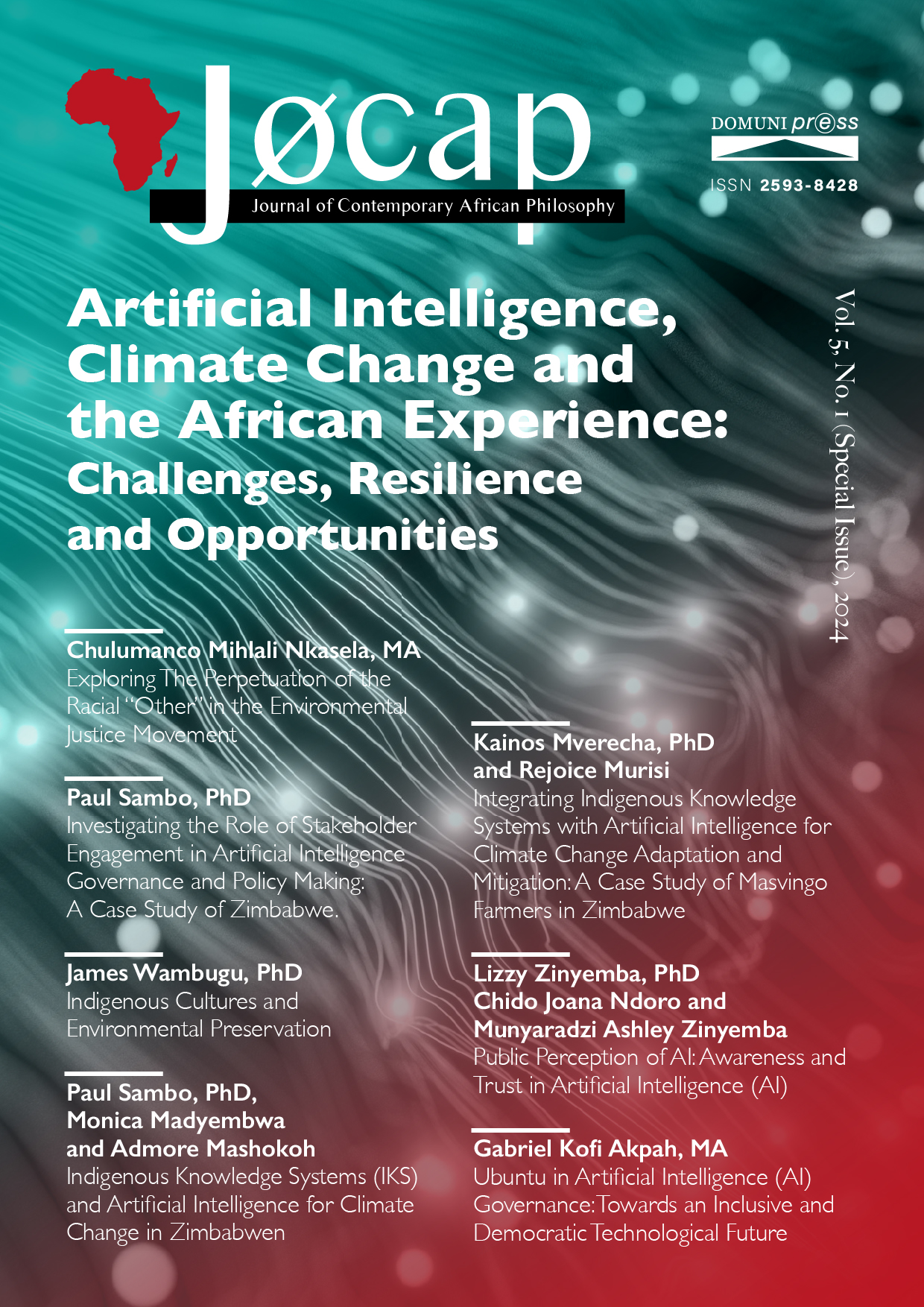
Climate change presents a global challenge that demands innovative, inclusive, and context-sensitive responses. A significant research gap exists regarding the systematic, ethical, and effective integration of IKS into AI systems, particularly in rural African contexts. This study explores the integration of Indigenous Knowledge Systems (IKS) with AI as a culturally embedded approach to climate change adaptation and mitigation. Employing a qualitative research design, including semi-structured interviews, direct observation, and content analysis, this research draws on sociometric theory to examine community social structures and identify key custodians of Indigenous knowledge. These insights inform the development of context-aware AI models capable of incorporating traditional knowledge into climate solutions. Triangulation of qualitative data ensured depth and cultural relevance in assessing the approach’s effectiveness. Findings reveal that integrating IKS into AI strengthens local applicability and acceptance of climate interventions while fostering the preservation and recognition of traditional knowledge. The study offers insights with implications for policy, sustainable development, and inclusive innovation, particularly in regions vulnerable to climate change. This research highlights the importance of leveraging diverse knowledge systems to co-create resilient, community-driven responses to environmental challenges.